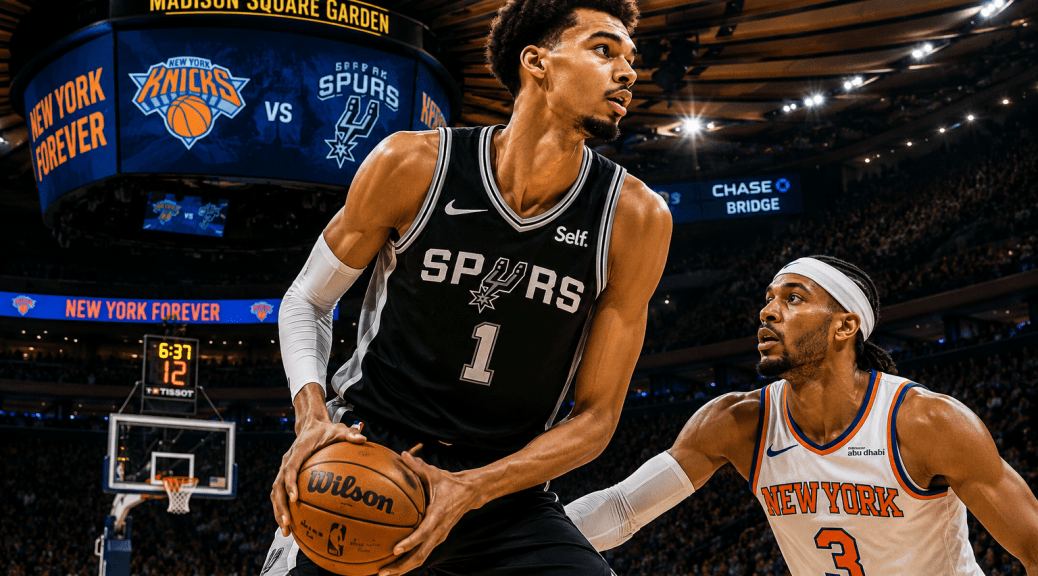
Can we finally put the “killer instinct” narrative surrounding Victor Wembanyama to rest?
At this stage of his career, Wembanyama simply isn’t there yet—and that’s not a criticism. It’s reality.
When fans invoke the names of Michael Jordan and Kobe Bryant, they often focus on the legendary competitive fire that defined both careers. What gets overlooked is that neither superstar carried that burden alone. Their greatness was amplified by teammates who embraced pressure and delivered in the biggest moments.
Jordan had Steve Kerr and a battle-tested supporting cast forged through years of playoff disappointment before breaking through. Kobe had Robert Horry, Derek Fisher, and veteran role players who repeatedly made championship-defining plays. Those teams didn’t develop championship DNA overnight. It took years of postseason failures before the “killer instinct” label became part of their identity.
The same principle applies throughout NBA history. Avery Johnson’s Spurs had Sean Elliott. Tony Parker’s championship teams relied heavily on players like Bruce Bowen and Brent Barry. Those groups experienced painful playoff exits before they became champions. Growth rarely happens in a straight line.
So let’s examine this game through that lens.
If Wembanyama is being cast as Batman, then who was Robin during the final four minutes? That’s the question supporters of this narrative should be asking.
Because what ultimately decided this game wasn’t a lack of killer instinct. It was a breakdown in team execution.
Three factors stand out:
1. Decision-Making in Winning Time
Forget the turnover everyone is talking about.
The more significant issue was offensive decision-making late in the game. The Spurs had already placed several Knicks players in foul trouble, yet there was little effort to consistently attack Karl-Anthony Towns or Josh Hart. More puzzling was the failure to relentlessly pound the ball inside when four New York starters were sitting on the bench.
Championship teams recognize advantages and exploit them. The Spurs failed to do that when it mattered most.
2. Missed Free Throws
There is no complicated analysis here.
Free throws are free points, and playoff basketball magnifies every missed opportunity. In close games, those misses become impossible to ignore.
3. Failure to Stop Runs
This has become a recurring issue.
The Spurs continue allowing opponents to string together momentum-changing runs without finding ways to disrupt them. It happened early in the game and surfaced again at critical moments. Good teams survive adversity. Great teams halt momentum before it becomes decisive.
The Spurs haven’t consistently done that yet.
And that’s the point.
Everyone knows why this game was lost. But elevating the conversation to questions of greatness or killer instinct for a player in his third season, while his team trails 0-2, ignores the historical reality of how championship players and championship teams are built.
Jordan endured years of playoff heartbreak.
Kobe endured years of playoff heartbreak.
The Spurs’ own championship core endured years of playoff heartbreak.
Those experiences shaped the mentality people now romanticize.
This Spurs team is playing with house money. Yet too many fans seem eager to crown them before they’ve earned it.
I’m not there.
To borrow a famous line from Dennis Green: “They are who we thought they were.”
The Knicks haven’t stolen this series. The Spurs have helped let them off the hook.
That doesn’t mean the series is over. Far from it. There is still time for this group to change the narrative and write a different chapter.
But if the Spurs continue making the same youthful mistakes that plagued them through the first two games, this series won’t return to San Antonio tied.
It will end with a sweep, and the Spurs will find themselves packing their bags somewhere between 7th Avenue, 8th Avenue, West 31st Street, and West 33rd Street in New York City.

